The Han Dynasty and the Silk Road
The Qin dynasty lasted fifteen years. The Han lasted four centuries — and it is the Han that China still calls its own. The country's majority ethnic group calls itself Han, and its script is still called Han characters. The Han kept Qin's centralised state but ruled it through Confucian scholars instead of Legalist enforcers, built a bureaucracy that every later dynasty inherited, and opened the overland routes to Central Asia that the world would come to call the Silk Road.
In short
The Han dynasty (206 BCE–220 CE) was founded by the commoner Liu Bang after the fall of Qin, and lasted four centuries in two halves — Western Han (capital Chang'an) and Eastern Han (capital Luoyang). Under Emperor Wu (r. 140–87 BCE), the envoy Zhang Qian travelled west in 138 BCE, opening the routes later called the Silk Road. The Han made Confucianism the ideology of government, invented paper, and ruled a population of nearly 60 million before collapsing in 220 CE.
From peasant rebel to emperor
When the Qin collapsed in 206 BCE, China fell back into civil war. The winner was Liu Bang, a minor official turned rebel leader, who defeated his rival Xiang Yu at the Battle of Gaixia in 202 BCE and took the title Emperor Gaozu. He was the first Chinese emperor from a common family — and the Han he founded would be the model for imperial China.
The Han kept Qin's commanderies and centralised administration but softened its rule. Confucianism, the philosophy of proper relationships, moral rulers, and educated officials, became the ideology of the state. In 124 BCE Emperor Wu founded the Imperial Academy to train men in the Confucian classics for government service. From then on, China's officials were scholars — a pairing of a strong throne with a literate bureaucracy that every later dynasty inherited.
Zhang Qian and the road west
In 138 BCE, Emperor Wu sent an envoy named Zhang Qian west into Central Asia to find allies against the Xiongnu, the nomadic confederation on China's northern border. Zhang Qian was captured almost immediately by the Xiongnu and held prisoner for ten years. After escaping in about 128 BCE, he reached the Yuezhi in Bactria (modern northern Afghanistan), failed to win them as allies, and returned to China in 126 BCE — thirteen years after he had left.
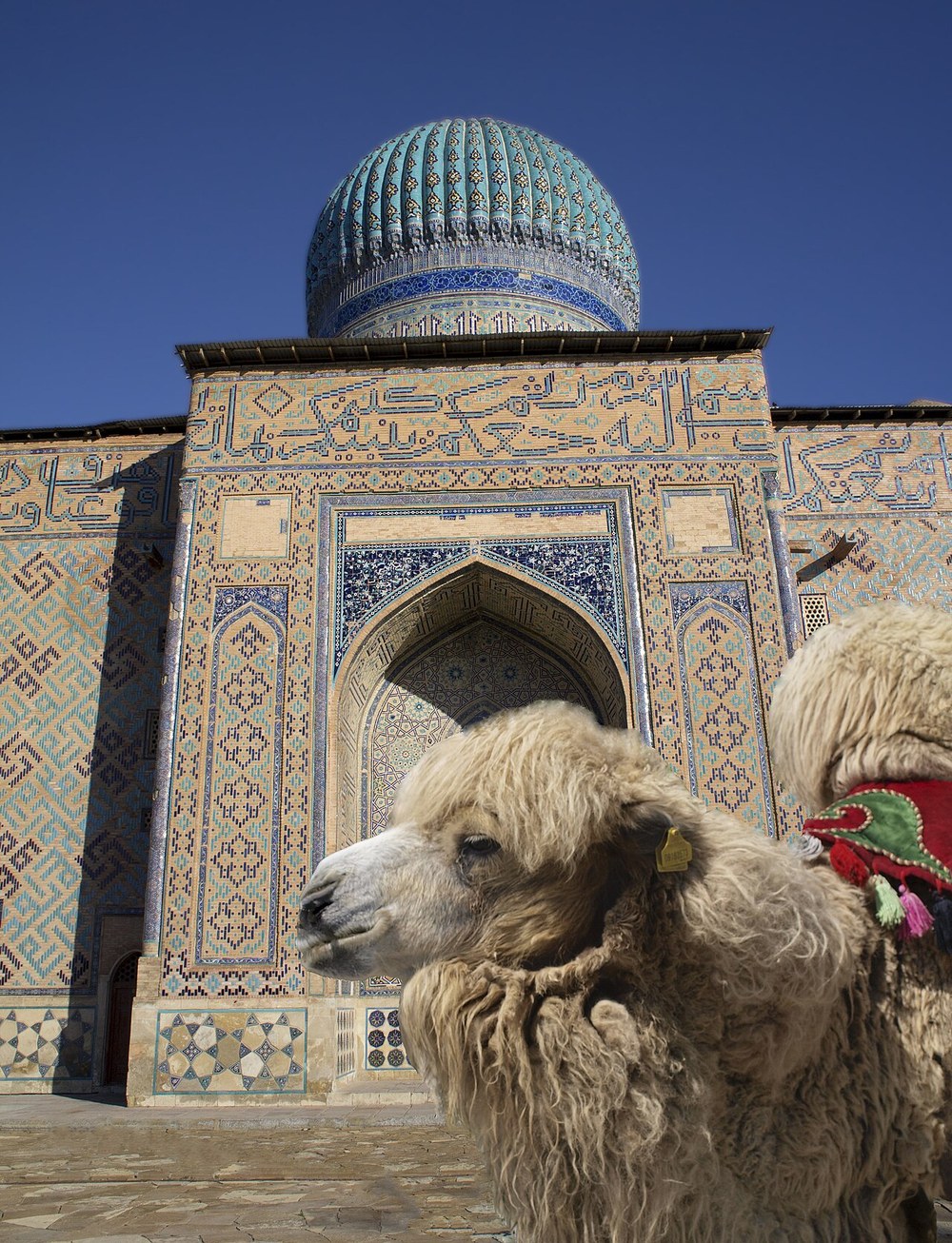
He had failed his mission, but his reports changed China. He described rich kingdoms to the west — Samarkand, Bukhara, and Ferghana — and lands farther still, including Persia and, apparently, Rome. The Han followed up with campaigns, garrisons, and trade. Chinese silk moved west; the swift horses of Ferghana, jade, glass, and gold moved east. The network of routes took its name much later, from the German geographer Ferdinand von Richthofen in 1877: the Silk Road. Caravans of Bactrian camels crossed the Taklimakan Desert from the Han capital, Chang'an, carrying silk to the Mediterranean world — and bringing Buddhism, new foods, and new ideas back to China.
A civilisation takes shape
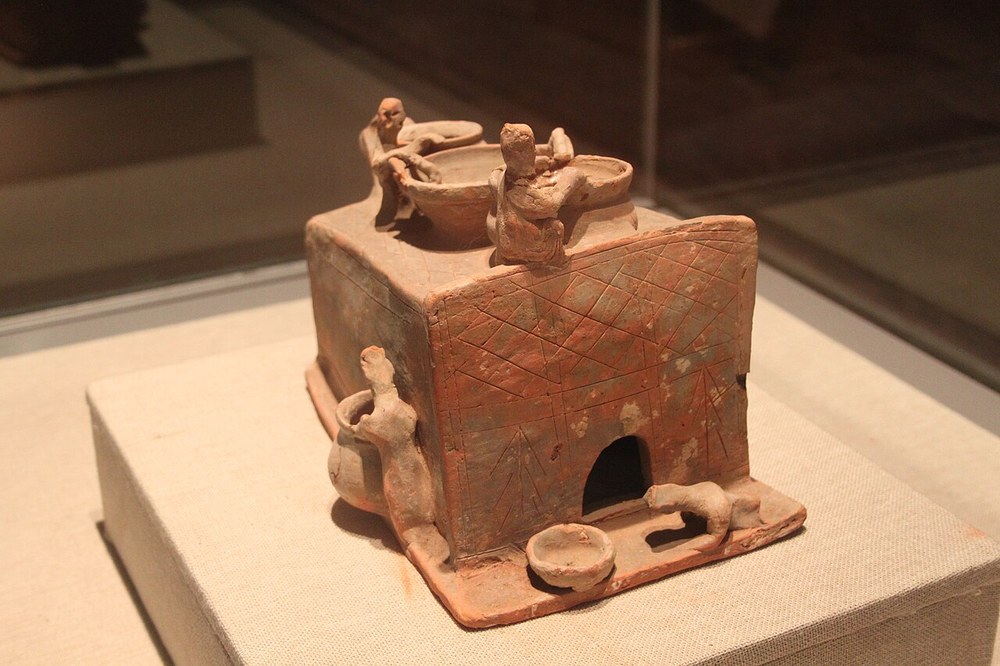
The Han was also an age of invention and writing. Paper is traditionally credited to the court official Cai Lun, around 105 CE. The historian Sima Qian wrote the Records of the Grand Historian (c. 94 BCE), creating the model for all later Chinese dynastic histories. The Han fixed the calendar still used for Chinese festivals, issued a coin that circulated for seven centuries, and built a state that at its height counted nearly 60 million people.
The dynasty weakened over the 2nd century CE as child emperors succeeded one another and power passed between the families of empresses and palace eunuchs. The Yellow Turban Rebellion of 184 CE shook the empire, and in 189 CE the general Dong Zhuo seized the capital. In 220 CE the last Han emperor was forced to abdicate, and China split into the Three Kingdoms of Wei, Shu, and Wu — a division that would last for nearly four centuries before China was reunited under the Sui and Tang.
Sources: EBSCO Research Starters, "Silk Road Opens"; Humanities LibreTexts, "The Silk Road"; CHINANETZ, "Han Dynasty (206 BCE–220 CE)"; Britannica, "Han dynasty" Checked 27 November 2026.