Republic, Civil War, and Modern China
The Qing fell in 1912, but the republic that replaced it did not bring stability. For the next 37 years China was torn by warlords, by a civil war between Nationalists and Communists, and by a brutal invasion from Japan. When the fighting finally ended in 1949, the Communists ruled the mainland and the Nationalists had retreated to Taiwan. Then, after decades of upheaval, a new turn in 1978 — reform and opening up — set China on the path to becoming the world's second-largest economy. It is one of the most consequential transformations in modern history.
In short
The Republic of China was proclaimed on 1 January 1912 after the Xinhai Revolution of October 1911, with Sun Yat-sen as provisional president. Decades of warlord rule, civil war between the Nationalists (Kuomintang) and the Communists, and the war against Japan (1937–45) followed. On 1 October 1949 Mao Zedong proclaimed the People's Republic of China in Beijing, and the Nationalist government retreated to Taiwan. In December 1978 Deng Xiaoping launched reform and opening up; China joined the World Trade Organization in 2001 and hosted the Beijing Olympics in 2008.
A republic without stability
The revolution began with an army uprising at Wuchang on 10 October 1911. Provinces declared for the revolution, and representatives meeting at Nanjing elected Sun Yat-sen provisional president. The Republic was proclaimed on 1 January 1912; Sun then agreed that Yuan Shikai, commander of the strongest northern army, would become president if he secured the abdication of the last Qing emperor — which came on 12 February 1912. It was the first republic in Asia, but it did not bring stable government. Yuan Shikai's death in 1916 left China divided among regional military rulers — the warlords — and the new republic spent its first decades struggling to hold together.
Sun Yat-sen's Nationalist Party, the Kuomintang (KMT), allied with the small Chinese Communist Party (founded in Shanghai in 1921) and with the Soviet Union to reunify the country. After Sun's death in 1925, Chiang Kai-shek emerged as KMT leader and launched the Northern Expedition (1926–28), but in 1927 he turned on the Communists in the Shanghai Massacre, and the alliance collapsed into civil war.
Civil war and invasion
The Communists, driven from the cities, built rural base areas under Mao Zedong, who became party chairman in 1935 after the Long March (1934–35) — a year-long retreat of some 6,000 miles to Yan'an in the north. Japan's seizure of Manchuria in 1931 and full-scale invasion in 1937 forced an uneasy truce: the KMT and the Communists formed a Second United Front against Japan. The war against Japan (1937–45) devastated China and drained the Nationalist government's resources.
After Japan's surrender in August 1945, hopes for a coalition government collapsed and the civil war resumed. By 1949 the Communists had won control of the mainland. On 1 October 1949 Mao Zedong proclaimed the People's Republic of China in Beijing; the Nationalist government, with Chiang Kai-shek and much of the KMT leadership, retreated to Taiwan.
Reform and opening up
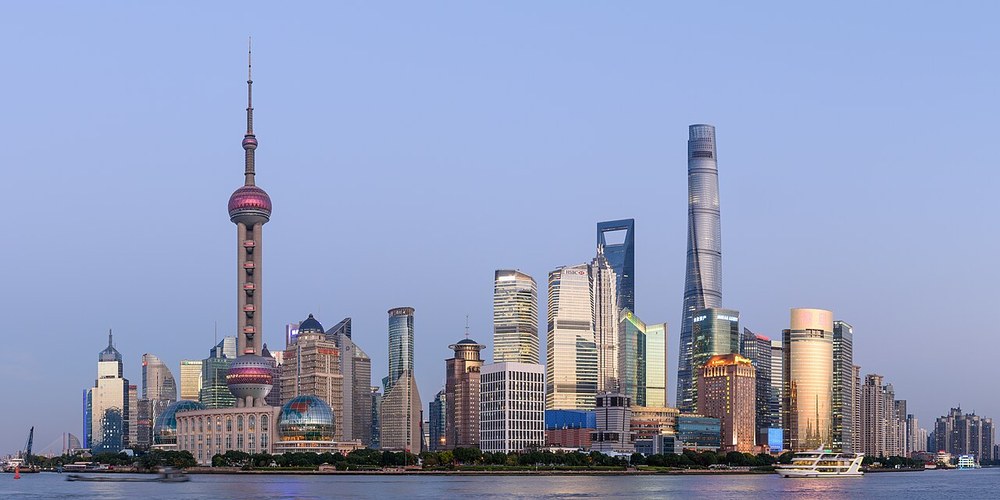
The first decades of the People's Republic brought land reform, industrialisation, and also catastrophic upheaval — above all the Great Leap Forward (1958–62) and the Cultural Revolution (1966–76), which left the economy on the brink of collapse. The turning point came in December 1978, when the Third Plenary Session of the 11th Central Committee, with Deng Xiaoping at its core, shifted the country's focus to economic construction and opening up. Farming was returned to family plots, special economic zones such as Shenzhen were opened to foreign investment, and private business was allowed to grow.
The results were extraordinary. China's economy grew from 368 billion yuan in 1978 to 121 trillion yuan by 2022. China formally joined the World Trade Organization on 11 December 2001, after 15 years of negotiations, and in August 2008 Beijing hosted the Olympic Games, with 10,500 athletes competing in 302 events. Today China is the world's second-largest economy and its largest exporter — a transformation that began with a revolution in 1911 and a reform in 1978, and that is still shaping the world.
Sources: PPSC HIS 1120, "Communist China"; EBSCO Research Starters, "Chinese Civil War"; Nutanica, "Republic of China (1912–1949)"; Xinhua, "Major events in 30 years of China's reform, opening-up" Checked 27 November 2026.